
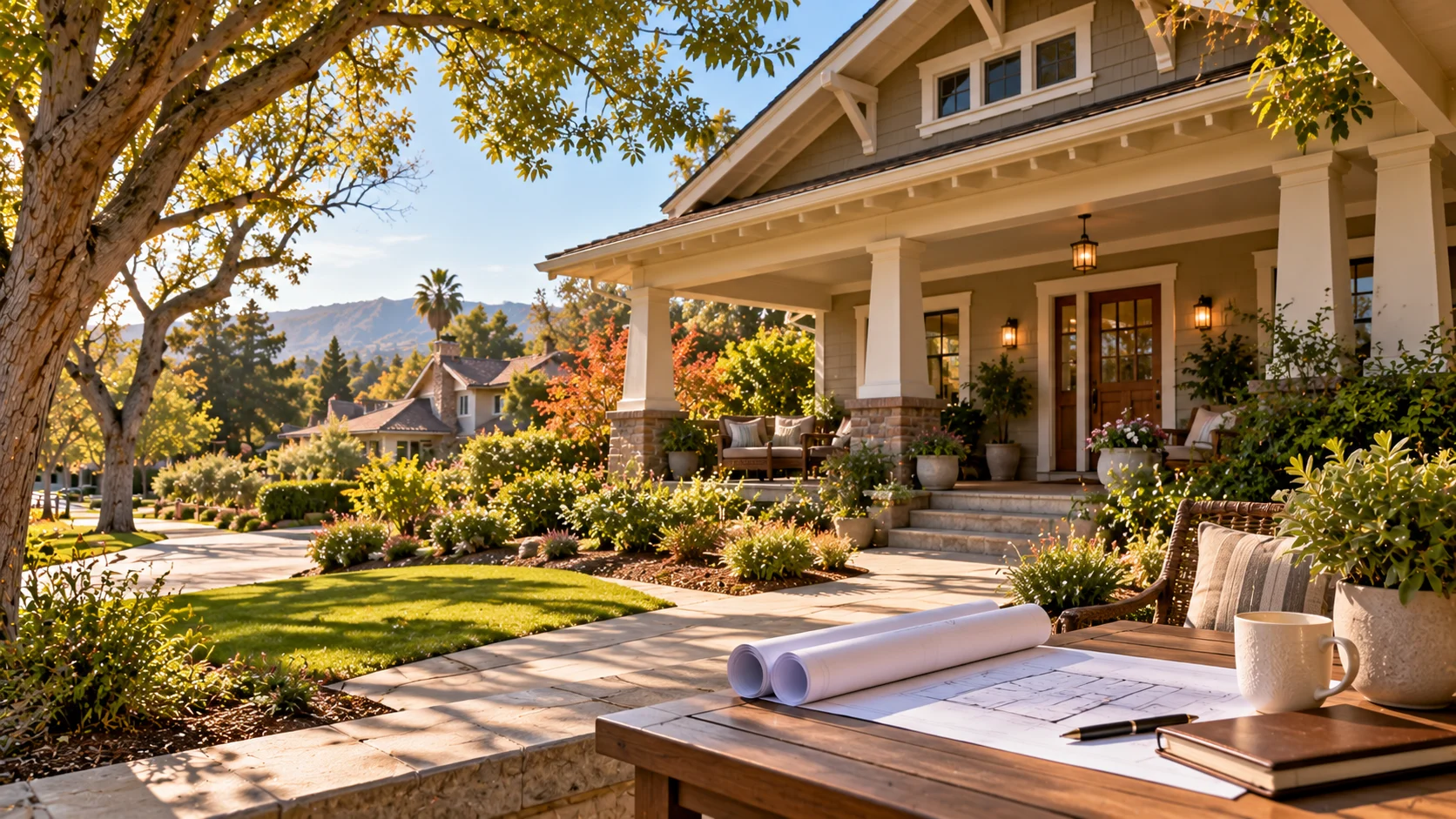
Claremont, California, is known for its tree-lined streets, established neighborhoods, distinctive architecture, and connection to the Claremont Colleges. For homebuyers who appreciate craftsmanship and character, a historic property can offer something that newer construction may not: original architectural details, mature landscaping, and a tangible connection to the community’s past.
However, buying a historic home requires more than falling in love with a vintage front porch, original woodwork, or a beautifully preserved façade. Older properties can come with specialized maintenance needs, renovation restrictions, aging infrastructure, and expenses that may not be obvious during an initial showing.
Some properties may also be eligible for preservation-related programs, including California’s Mills Act property tax program, if they meet the applicable requirements and the local jurisdiction participates. Eligibility is not automatic, and potential tax benefits should be evaluated alongside the property’s purchase price, maintenance needs, and contractual obligations.
For buyers considering a historic property in Claremont, the key is to balance architectural appeal with a realistic understanding of ownership costs. Careful research, qualified inspections, and a well-planned budget can help you decide whether a particular home fits your lifestyle and long-term financial goals.
This guide explains what to investigate when buying a historic home in Claremont, CA, including preservation requirements, renovation planning, potential Mills Act eligibility, and financial due diligence.
Understand the Home’s Historic Status and Preservation Requirements
Before making an offer, determine whether the property is formally designated as historic, located within a historic district, or simply an older home with architectural character. These distinctions can affect the approvals needed for future changes.
Determine whether the property is officially designated
A home’s age alone does not necessarily make it a legally designated historic property. Historic status can depend on local designation, district boundaries, applicable preservation rules, and other formal criteria.
Start by asking the seller and your real estate professional whether the property has any known historic designation or preservation-related conditions. Then verify the information with the City of Claremont’s relevant planning or historic preservation resources.
Questions to investigate include:
- Is the property individually designated as historic?
- Is it located within a designated historic district?
- Are there recorded preservation easements or other restrictions?
- Have previous renovations received the required approvals?
- Are there pending applications or known compliance issues?
- Are there local rules affecting demolition, additions, exterior alterations, or significant architectural features?
Request available records rather than relying solely on listing descriptions. Terms such as “historic,” “vintage,” and “classic” may be used descriptively in marketing and do not, by themselves, establish legal designation or restrictions.
If the property is formally designated, ask the appropriate city department which rules apply to the specific address and the proposed work you may eventually want to undertake.
Learn which renovations may require approval
Historic properties can have architectural features that contribute to their character, such as original windows, exterior siding, porch details, rooflines, decorative trim, masonry, or distinctive landscaping.
Depending on the property’s status and applicable local requirements, changes to certain features may require review or approval. Work that seems routine to a homeowner may involve additional planning if it affects a protected exterior feature or a designated building.
Before assuming you can replace windows, expand a room, alter the front façade, build an addition, or change a roof, ask for written guidance from the appropriate city department.
Create a list of the improvements you expect to make during the first few years of ownership. Separate urgent repairs from optional design changes, then confirm the approval process for each project.
This step can prevent an expensive surprise after closing. It can also help you determine whether the home can realistically accommodate your needs, especially if you intend to modernize the layout or add usable space.
Review permits and the property’s renovation history
A historic home may have undergone several rounds of work over decades. Some improvements may have been completed with permits and approvals, while others may need further investigation.
Ask the seller for available records covering additions, structural changes, electrical work, plumbing, roofing, and other major improvements. Where available, review permit history through the appropriate local authority.
Pay attention to differences between the home’s current configuration and its documented history. An enclosed porch, converted garage, expanded kitchen, or additional bathroom may affect your renovation plans if its status is unclear.
If you discover work that appears unpermitted, do not automatically assume it can be legalized or must be removed. The outcome depends on the work, the applicable requirements, and the property’s circumstances. Ask the city and qualified professionals what steps may be necessary.
Documenting these issues before closing gives you a better basis for estimating costs, negotiating terms, and deciding whether the property is a suitable purchase.
Evaluate Renovation Costs, Inspections, and Long-Term Maintenance
Historic homes can be appealing because of their original materials and craftsmanship, but older building systems may require more attention than those in recently constructed properties. A thorough evaluation helps you distinguish manageable upkeep from repairs that could significantly affect your budget.
Arrange inspections suited to an older property
A general home inspection is an important starting point, but additional specialist evaluations may be appropriate depending on the home’s condition, age, and visible issues.
Discuss whether you should obtain further assessments of:
- The roof, gutters, and drainage
- Foundation conditions and visible structural concerns
- Electrical panels, wiring, and grounding
- Plumbing materials, water pressure, and potential leaks
- Heating, cooling, and ventilation systems
- Wood-destroying pests and moisture damage
- Windows, doors, masonry, and exterior finishes
- Chimneys, fireplaces, and other distinctive features
- Possible lead-based paint or asbestos-containing materials
Not every older home has every problem, and an older system is not automatically defective. The purpose of specialist evaluations is to establish what is present, what needs attention, and what the likely costs may be.
For example, an original window may be repairable and worth preserving, while another may have substantial deterioration. An aging electrical system may need further assessment even if the lights work during a showing.
Ask inspectors to explain the difference between immediate safety concerns, near-term repairs, and longer-term maintenance. This will help you prioritize the work rather than treating every finding as equally urgent.
Build a renovation budget that reflects historic details
A renovation budget should account for both the physical work and any additional design, approval, or material requirements that apply to the property.
Potential costs include labor, materials, professional design services, engineering, permit fees, specialist trades, temporary accommodation, and the cost of protecting original features during construction.
If a property requires specialized restoration, you may need contractors experienced in historic materials and methods. Their pricing and availability may differ from those of contractors focused primarily on standard modern renovations.
Before committing to a major project, request detailed estimates based on the actual condition of the home. When possible, compare proposals that clearly identify the work included, materials, assumptions, exclusions, and potential additional charges.
A useful budget separates projects into three categories:
- Essential repairs: Work needed to address safety concerns, active leaks, significant deterioration, or essential system failures.
- Functional upgrades: Improvements that support everyday living, energy performance, comfort, or accessibility.
- Optional restoration and design: Projects intended primarily to enhance appearance, restore original features, or customize the home.
Complete essential work first unless a qualified professional identifies a different priority. This approach helps preserve flexibility if the project costs more than expected.
Investigate hazardous materials before starting work
Some older homes may contain lead-based paint, asbestos-containing materials, or other hazards. Their presence depends on the property’s age, construction materials, and renovation history.
Do not assume a material is safe simply because it looks intact, and do not disturb a suspected hazardous material without appropriate guidance.
If you plan to sand painted surfaces, remove flooring, alter insulation, or renovate older mechanical systems, consult qualified professionals about the appropriate assessment and handling procedures. Certain work may be subject to specific regulations and contractor requirements.
Include testing and safe handling in the project budget where appropriate. Discovering these issues during demolition can create delays and costs that could have been anticipated with better planning.
Balance modernization with architectural preservation
Many buyers want the character of an older home with the comfort of modern living. The challenge is identifying which improvements can be made without compromising important features or violating applicable restrictions.
Consider which elements are essential to your household. You might want a more functional kitchen, improved insulation, updated electrical service, better heating and cooling, or additional bathroom space.
Ask professionals how to achieve those goals while preserving features that contribute to the home’s value and character. For example, repair may be preferable to replacement for certain original materials, but the best approach depends on condition, performance, safety, cost, and applicable requirements.
Do not assume every historic feature must remain untouched or that every modernization project will be approved. Confirm the rules for the property and the proposed work before finalizing a renovation plan.
A thoughtful approach can help you avoid spending money on design work that later needs to be revised.
Explore Mills Act Eligibility and the Financial Implications of Historic Ownership
The Mills Act is a California program that allows participating local governments to enter into contracts with owners of qualifying historic properties. Under applicable rules, these contracts may provide property tax benefits in exchange for preservation-related commitments.
For a buyer considering a historic home in Claremont, the important point is that potential Mills Act benefits must be verified for the specific property and jurisdiction. Do not assume that every historic home qualifies or that an existing benefit will automatically continue under unchanged terms after a sale.
Understand how the Mills Act works
The Mills Act is intended to encourage the preservation and rehabilitation of qualifying historic properties. Participating local governments administer the program under their adopted procedures and the applicable state framework.
Where a property qualifies and a contract is approved, property tax valuation may be determined under the program’s rules rather than solely through the usual approach. The resulting tax benefit, if any, depends on the property’s circumstances and the applicable valuation method.
The program generally involves contractual preservation obligations. Owners may be required to maintain, preserve, or rehabilitate historic features according to the contract and an approved preservation plan.
This means the program should not be viewed as a simple discount with no responsibilities attached. A tax benefit may be valuable, but it needs to be evaluated alongside the cost of complying with the contract and maintaining the property.
Before relying on any potential savings, request the relevant program documents and consult the appropriate local authority and tax professionals.
Verify local participation and property eligibility
Do not assume that a property is eligible merely because it is old, has architectural significance, or appears in a historic neighborhood.
Ask the City of Claremont whether it currently participates in the Mills Act program, whether applications are accepted, and what eligibility criteria and deadlines apply. Program participation, procedures, and available application opportunities should be confirmed directly rather than inferred from general information about California.
If the property is already subject to a Mills Act contract, request a copy and review its terms. Confirm the contract’s duration, obligations, preservation plan, reporting requirements, and any conditions that may affect a future owner.
If no contract exists, ask whether the property and your proposed plans could meet the current requirements. Approval should never be treated as guaranteed.
You should also ask the appropriate local and county offices how a change in ownership may affect the property’s status, valuation, or contractual obligations. Obtain property-specific guidance before incorporating an assumed tax reduction into your purchase budget.
Compare potential tax savings with preservation expenses
A property tax benefit can be financially meaningful, but the total ownership cost remains the more useful measure when comparing homes.
Estimate your annual expenses using verified information about property taxes, insurance, utilities, maintenance, and any required preservation work. If you are evaluating a property with an existing Mills Act contract, include the obligations associated with that agreement.
For a property without an approved contract, prepare your initial budget using a realistic tax estimate that does not depend on future approval. You can evaluate any potential benefit separately once the applicable authority confirms the program’s requirements.
Also consider the effect of repairs and upgrades on your available cash. A historic home with a lower purchase price may still require significant early spending, while a more expensive but well-maintained property may offer greater predictability.
Compare properties based on their expected total cost of ownership, not just the purchase price or an advertised tax advantage.
Review financing, insurance, and resale considerations
Historic features can affect how you evaluate financing, insurance, and future resale. These effects vary by property and provider, so obtain property-specific information before making assumptions.
For financing, discuss the home’s condition, required repairs, and any renovation plans with your lender. Ask whether the property meets the loan program’s requirements and whether proposed work affects the financing process.
For insurance, request a quote early enough to evaluate coverage, deductibles, exclusions, and the basis used to estimate rebuilding costs. A standard replacement-cost estimate may not fully reflect the expense of recreating specialized materials or architectural details, so ask the insurer how the home’s unique features are considered.
For resale, think about how the home’s layout, maintenance requirements, historic status, and restrictions may affect the future buyer pool. Some buyers actively seek historic properties, while others may prefer a newer home that requires less specialized upkeep.
The goal is not to assume that a historic home will be difficult or easy to sell. It is to understand the specific property’s advantages, obligations, and likely audience before purchasing it.
Make a Confident Purchase Decision With a Complete Due Diligence Plan
Buying a historic home is a long-term decision that combines emotional appeal with financial responsibility. The more you learn before closing, the easier it becomes to decide whether the property fits your plans.
Create a property-specific due diligence checklist
Before removing applicable contingencies or committing to major renovations, organize the information you need to make an informed decision.
Your checklist should include:
- Confirmation of historic designation or district status, where applicable
- Written guidance about renovation and preservation requirements
- Available permit and improvement records
- General inspection findings and recommended specialist evaluations
- Estimates for urgent repairs and foreseeable maintenance
- Quotes for insurance and an understanding of coverage limitations
- A realistic property tax and ownership-cost estimate
- Mills Act program information, if relevant
- Review of any existing preservation contract and its obligations
- Mortgage approval conditions and funds needed to close
- A cash reserve for repairs and unexpected expenses
Not every item will apply to every property. Tailor the list to the home’s condition, legal status, and your intended use.
Keep copies of inspection reports, estimates, city correspondence, and contractual documents together. This record can help you compare options and establish a practical plan for your first year of ownership.
Work with professionals who understand historic properties
A historic home may require input from several professionals. Your real estate agent can help coordinate the transaction and identify questions that need further review. A qualified inspector can assess visible conditions and recommend additional evaluations. Contractors or preservation specialists can provide cost estimates and advise on appropriate methods.
City planning or preservation staff can explain applicable local requirements, while your lender and insurance professional can clarify financing and coverage. A tax professional can help evaluate property tax questions and the possible implications of a Mills Act contract.
Each professional should address the part of the decision within their expertise. If advice conflicts or remains unclear, seek clarification before proceeding.
It is especially important to get written information when a decision depends on formal approval, a contract, or a projected financial benefit.
Decide whether the property fits your lifestyle and budget
A historic home may be a strong fit if you value its architecture, location, and distinctive character and are comfortable planning for maintenance. It may be less suitable if you need extensive changes immediately, have limited funds for unexpected repairs, or prefer a home with minimal upkeep.
Consider how long you expect to stay, how much renovation you can realistically manage, and whether your household needs may change over time. Think about the trade-offs between preserving original features and adapting the home to your daily routines.
Do not stretch your budget based on a possible future tax benefit or an optimistic estimate of renovation costs. Keep sufficient funds available for essential repairs and ordinary life expenses after closing.
A well-informed decision does not require every uncertainty to disappear. It requires you to understand the major risks, verify the important facts, and choose a property whose benefits and responsibilities fit your circumstances.
Plan for long-term stewardship
Owning a historic home can involve preserving features that contribute to the property’s character for future owners and the wider community. Even when a property is not formally designated, original materials and craftsmanship may be important to its appeal.
Create a maintenance calendar for roofing, drainage, paint, woodwork, plumbing, electrical systems, and other components relevant to the home. Keep records of repairs, contractor details, permits, and warranties.
If the property is subject to a preservation contract or local requirements, organize those documents and make sure future projects are reviewed before work begins.
Long-term planning can spread costs over time and help you respond to maintenance needs before they become more expensive problems.
For buyers considering a historic home in Claremont, the best starting point is a combination of curiosity and careful verification. Appreciate the property’s history, but investigate its condition, restrictions, and full financial picture. With a realistic budget and the right professional guidance, you can make a decision that respects the home’s character while supporting your own long-term goals.
Frequently Asked Questions
1. What qualifies as a historic home in Claremont, CA?
A home’s age alone does not establish formal historic status. Qualification or designation may depend on local criteria, historical significance, architectural features, and whether the property has been formally designated or is located in a historic district. Confirm the status of the specific address with the City of Claremont.
2. Can I renovate a historic home in Claremont?
Renovations may be possible, but requirements depend on the property’s designation, the work proposed, and applicable local rules. Some exterior changes, additions, or alterations to significant features may require review or approval. Verify requirements with the appropriate city department before beginning work or finalizing a renovation budget.
3. Does the Mills Act reduce property taxes on historic homes in Claremont?
The Mills Act can provide property tax benefits for qualifying properties under contracts administered by participating local governments. Eligibility and savings are not automatic. Confirm Claremont’s current participation, the property’s eligibility, and the terms of any existing contract with the appropriate authorities and a qualified tax professional.
4. Are historic homes more expensive to maintain?
They can be, particularly if specialized materials, restoration techniques, or older building systems require attention. However, costs vary widely by property condition and maintenance history. Obtain a thorough inspection, specialist evaluations where appropriate, and contractor estimates before deciding whether the home fits your budget.
5. What should I inspect before buying an older home in Claremont?
Start with a professional home inspection and consider specialist evaluations of the roof, foundation, electrical and plumbing systems, drainage, pests, and potential hazardous materials. Review permits, past renovations, insurance availability, property tax obligations, and applicable preservation restrictions. Prioritize immediate safety concerns and major repairs when evaluating the purchase.
Ready to Explore Your Real Estate Options?
Buying a historic property can be rewarding when the home’s character, renovation requirements, and financial responsibilities align with your goals. Taking time to understand the details before making an offer can help you move forward with greater confidence.
For guidance on your real estate goals and the financial considerations involved in your next move, connect with CC & Co.